The Real Invasion
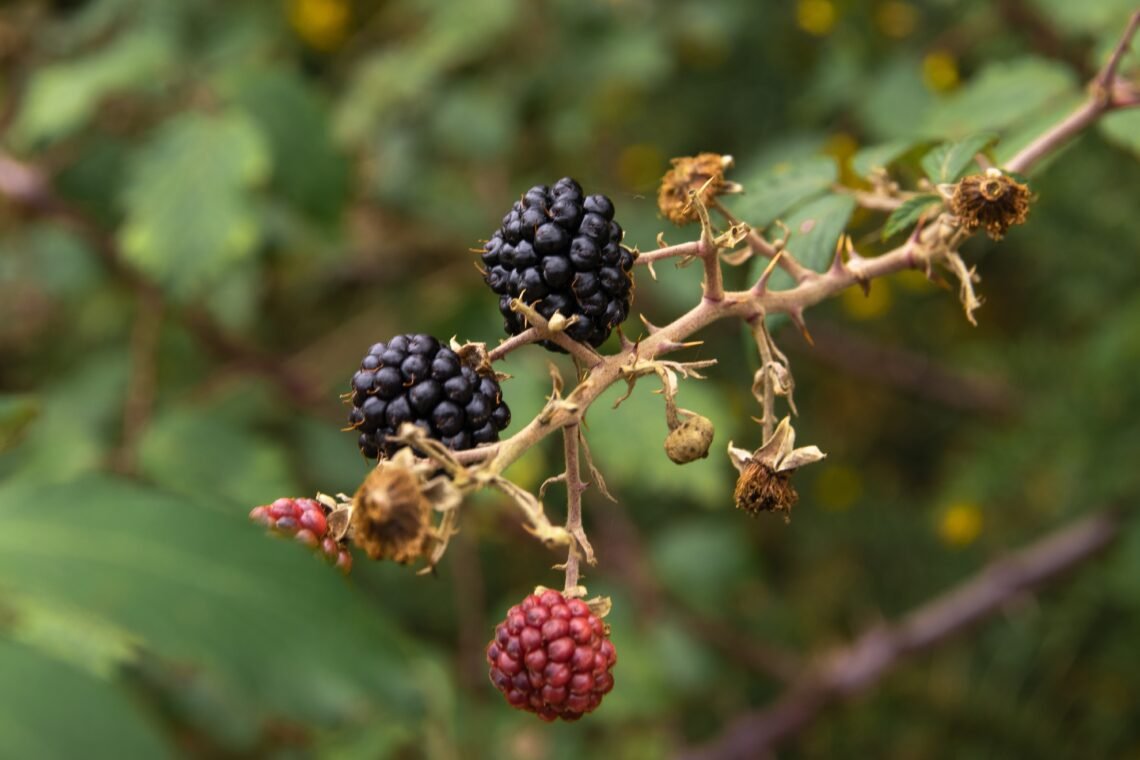
I come from the northern-central plains of India, where berries are considered an exotic fruit. So when I landed in Canada a few years back, I was super stoked to see scrumptious looking berries hanging from thick thorny shrubs by the streets and the walking trails. Every year around July and August, the streets of Vancouver burst with the sweet smell of blackberries. I cherished the experience of plucking and eating these beautiful berries, a gift from Mother Nature. The berry shrub shares its fruits in abundance with both her human and non-human relatives; hence, I was a little surprised to learn that blackberry is considered an invasive species.
The term invasive species got stamped in my mental dictionary after coming to Canada. Many species of plants and animals are considered invasive in this part of the world. But I often wonder who is really invasive — us or them?
What is invasive?
Any species of living being that can grow and reproduce rapidly in a foreign environment due to its ability to adapt. They might have a destructive impact on the native land, and the surrounding ecosystem. They can also destroy and displace native species of the land invaded. Much like the current human who have displaced other humans through wars, or invaded a landscape by altering the environment through human-modified unnatural materials.
So why are the blackberries considered invasive in Canada? The Himalayan blackberries, the dandelions, the European fallow deers among other beings were introduced to the Turtle island also known as North America by European settlers. They did not come on their own accord. European settlers forcibly occupied these lands from the Indigenous peoples — brought their guns and people, their cattles and chickens, their fish and plants to create another home. As Dr Nancy Turner, a noted ethnobotanist says, “Europeans are great at bringing their own backyards wherever they go in the world” (as cited in Cheung, 2020, para.16). Settler colonialism violently displaced thousands of native peoples from their land, forcing a foreign culture, food and ways of being on them. So who really is invasive?
Are plants and animals invasive?
Continuing with the story of the delicious blackberry, known as the Himalayan Blackberry in the West Coast, she found her way to this part of the world through Luther Burbank, a settler, and a self-made horticulturist who experimented with over hundreds of plant species. The story goes that he was sent the blackberry seeds via mail. Since the package arrived from India, he presumed it to be an Indian berry, naming it the Himalayan blackberry. A misnomer, since the berry is originally from Armenia and northern Iran. It is, however, not the first time that a white settler has misnamed something or someone. The famous navigator, Christopher Columbus who was believed to have ‘discovered’ America ( as if the land did not exist before him) thought that he had found India, thereby naming the Indigenous peoples from the Turtle island as Indians. I am digressing, but it was a refreshing piece of information for me; I have wondered since childhood as to why the native people of the Americas are called Indians.
So coming back to the story of the Himalayan blackberry, it is now found in most forested areas of British Columbia (BC), multiplying rapidly near a source of water. It is a tenacious plant, and we humans, birds, bees and bears like to feast on them, thereby help in its reproduction by the natural act of eating and spreading the seeds. Similar stories can be found about the European fallow deer population in BC, or the Asian carp who were introduced to the land for recreational purposes like sport hunting/fishing and pet trading.
During the summer months, it is a common sight to see workers applying weed killers on the grass to kill some of these invasive plant species. However, a weed killer like any other chemical also kills our other relatives — the pollinators. With pollinators dead, we disrupt a vital member of the ecosystem without which most species cannot survive.
Must we act so violently towards our non-human relatives, who take over the land? According to Anishnaabe teachings ( an Indigenous nation from North America), it is problematic to view these plants with the tag of being ‘invasive,’ since they did not find their own way to a foreign landscape. Like humans they migrated, but not consciously, they were brought by the homo sapiens like the deers and the cattles, or they found themselves attached to a part of a shipment or a boat, and ended up travelling to another part of the world. They are simply doing what they can, to best survive in a foreign land, and are enacting their natural habit. Some of them grow rapidly, some don’t; some of them eat other beings, some don’t, but most importantly they did not play a role in harming the environment actively. It was human intervention that led to this carnage.
Like most Indigenous communities, Anishnaabe people recognise all plants and animals as persons, their kin and relative; and not an object, a resource, or a species to be dissected and exploited. Anishnaabe elders teach us to view the arrival of any new plant with curiosity, rather than threat. To understand the natural migration process and to determine the reason why these new plants or animals are in this territory, and discover the nature of relationship one can have with them ( Reo & Ogden, 2018). For instance, blackberry shrubs offer us fruit, dandelions many medicinal properties, and each part of cattails have various uses. Leigh Joseph, an ethnobotanist from the Squamish First Nations in BC reminds us, rather than finding fault with the plants or the animals, they need to be watched and controlled where it might run the risk of outgrowing native species (as cited in Cheung, 2020).
Dr Kimmerer gives us the example of the emerald ash borer, a jewel beetle that found its way to US and Canada via wooden packaging materials. It can cause serious damage to an ash tree by chewing up the inner layer of the bark, thereby destroying the life blood of the tree. An important cultural tree for the Potawatomi basket makers this beetle has created a havoc, leaving behind “boneyards of backless trees” (Kimmerer, 2013, p. 150). The guardians of the black ash tree have taken positive steps by collecting, storing and distributing the seeds, and most importantly replanting the forest after the invasion period passes over. However, the story remains the same. These beetles did not introduce themselves to North America on their own, they had assistance from humans. Woodpeckers are the only native predators that feed on emerald ash borers. However, the invasive species management bodies have imported parasitoids from China to test their efficacy as biocontrol agents against these beetles (Natural Resources Canada, 2025). It is yet to be seen how these new species of parasitoids impact the native ecosystem. The story repeats itself. Whether for fun, food or wildlife management settler society continue to bring non-native species in a foreign land. Kathy LeBlanc, an Anishnaabe elder and a cultural leader from Bay Mills exclaims, “Respect nature and it will balance. I mean everything has its cycles, leave it alone for gosh sakes. Let it do its thing and quit playing God”(as cited in Red & Ogden, 2018, p. 1449).
Humans as invasive species
Anishnaabe knowledge holders talk about “invasive land ethic”(Reo & Ogden, 2018, p. 1449). Linked to settler colonialism in North America, they speak of invasive land ethic as an ideology which includes the imposition of Euro-American property ownership laws, a worldview where environmental management hinges on human intervention, and the separation of people from nature.
I extend this understanding of invasive land ethic to human beings in general. With the ideologies of capitalism and neoliberalism driving most countries today, humans have invaded natural landscapes for purely anthropocentric gains – mining, industrial agriculture, residential housing, and for the commercial development of land. Land invasion by giant corporations for AI data centres or to build commercial/ residential complexes have forced our non-human relatives out of their natural habitat. In fact every modern human activity has been invasive, not taking into care or account how our actions affect other living or non-living beings.
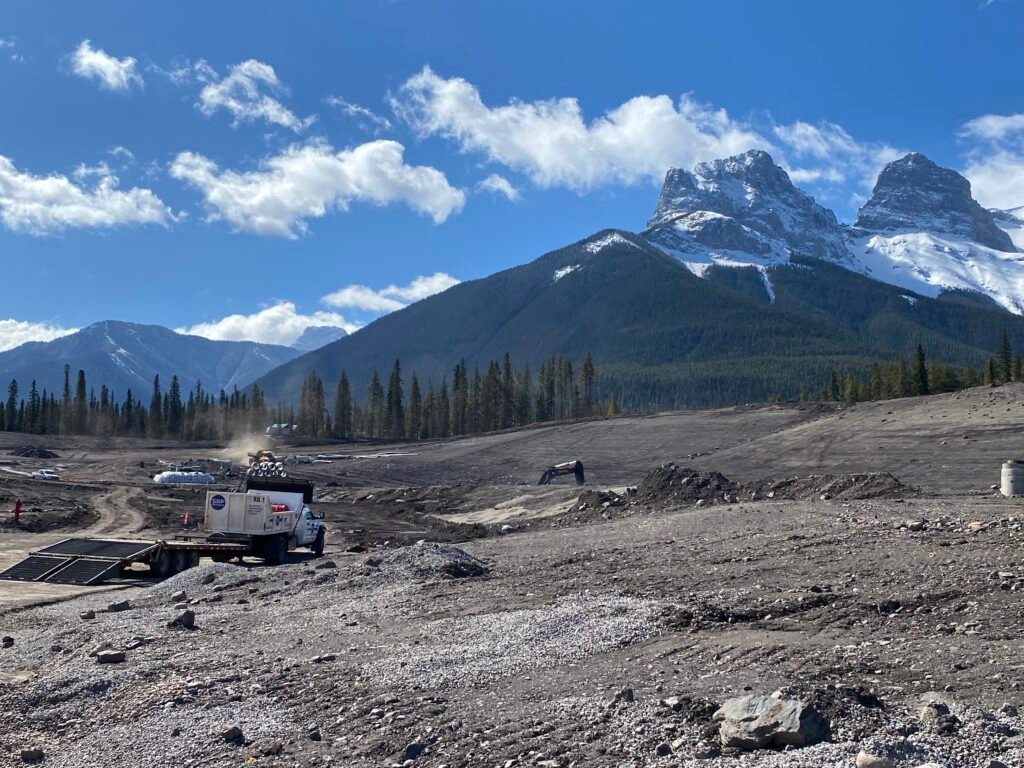
Ongoing slaughter on the land for residential construction in Canmore, Alberta, Canada.
To support a growing human population, forested lands have been encroached for residential housing, mountains have been left barren due to logging, and cattles are bred on a massive scale to further industrial farming for the constant supply and production of meat. Our lust for uncontrolled growth, our unhinged use of modern day technology, our want for convenience has pushed our more-than human relatives to a corner leading to frequent human-wildlife interactions. Unfortunately, in these narratives the more-than human world is often presented as a villain. For example, the coyotes in Stanley Park, Vancouver have been labeled as aggressive because of incidents of attack on pet dogs, and in a few cases where they have bitten humans. Do we ever pause to reflect on these negative wildlife interactions? Who is truly at fault?
I leave you readers with a thought – who is really invasive — us, the humans or them, the plants, animals or insects?
I also leave you to ponder on the question — what action can you take today as human species to be less invasive?
References:
Cheung , C. (2020, August 21). How blackberries took over. It’s a juicy story.The Tyee. https://thetyee.ca/News/2020/08/21/How-Blackberries-Took-Over/
Earth Rangers(n.d.) Ten Of The World’s Most Invasive Species. Earthrangers.com. https://www.earthrangers.com/EN/CA/top-10/ten-of-the-worlds-most-invasive-species/?gad_source=1&gad_campaignid=22700395134&gbraid=0AAAAADpLQgi3lOL42O6Ob16ZrsPvw1i_U&gclid=CjwKCAjwhqfPBhBWEiwAZo196k0Za1CZQaw_0SC6yuICOHPT_4eIKcq6qwhf87Zxzmq8Dxo19K81JxoCJIUQAvD_BwE
Kimmerer, R. (2013). Braiding Sweetgrass. Milkweed Editions.
Natural Resources Canada. (2025, January 10). Emerald ash borer (factsheet). Natural Resources Canada. https://natural-resources.canada.ca/forests-forestry/insects-disturbances/emerald-ash-borer-factsheet
Reo, N. J., & Ogden, L. A. (2018). Anishnaabe Aki: An indigenous perspective on the global threat of invasive species. Sustainability Science, 13(5), 1443–1452. https://doi.org/10.1007/s11625-018-0571-4
Ryan, Denise. (2025, June 01). Remember all those Stanley Park coyote attacks? Blame the pandemic, says researcher. Vancouver Sun. https://vancouversun.com/news/stanley-park-coyote-attacks-pandemic-ubc-research
1421 Foundation. (n.d.). Christopher Columbus: Rediscovering the Navigator’s Legacy. The 1421 Research Education and Exploration Foundation. https://www.1421foundation.org/

You May Also Like

Should I Continue to Teach English? Conflicting Subjectivities of a Racialized Teacher

English as a Global Language: Pathway to Equality or Barrier to Inclusion?