
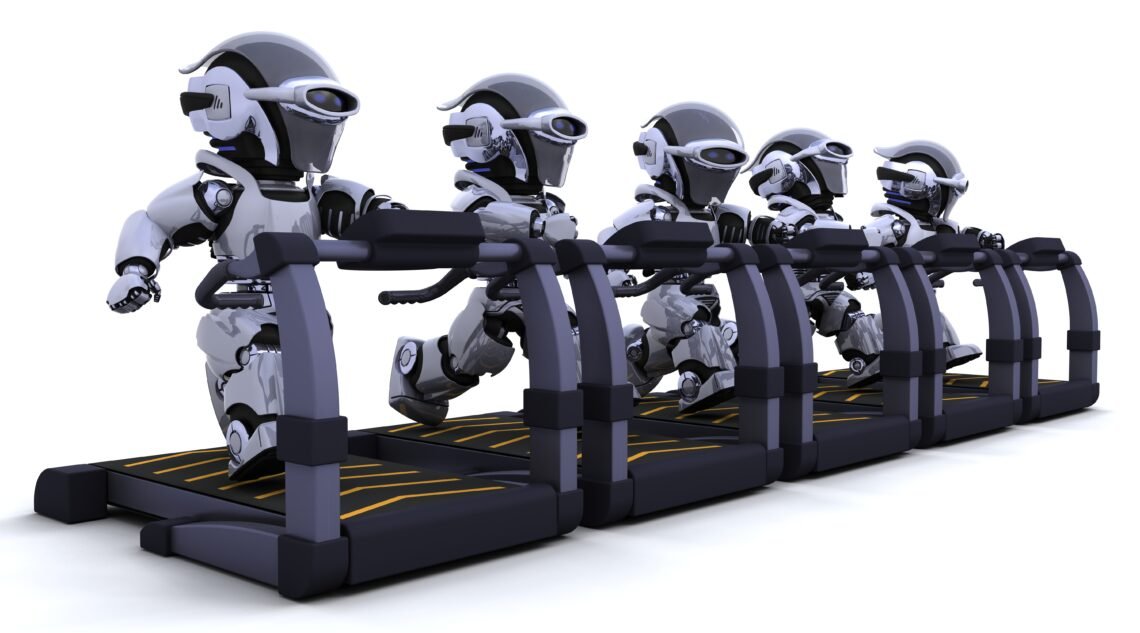
The AI Rush
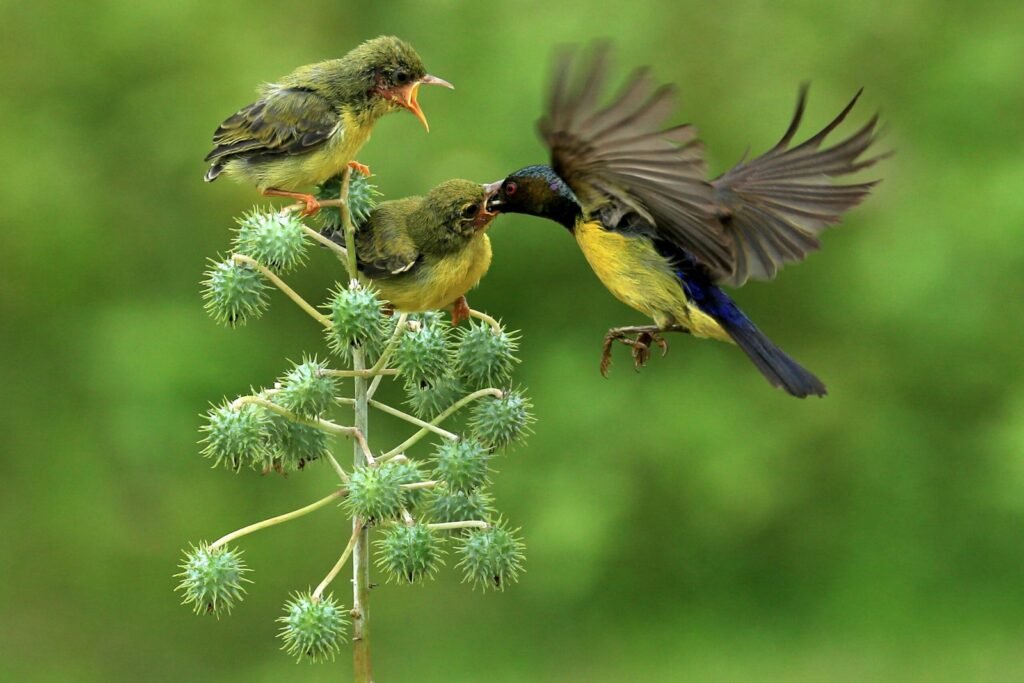
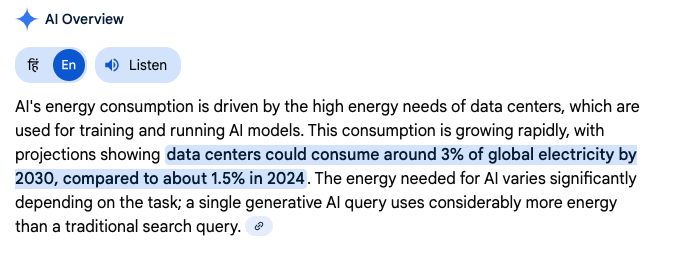
Every time I open the Google search engine, the ever present AI machine is ready with suggestions – reading, accumulating, and categorizing the information for me. Did I ask for it ? No! I’m perfectly capable of reading a couple of websites, do a comprehension research to make my own decisions. However, it is forced down my throat. Just like a mother bird putting food deep inside her baby’s throat.
Every person on this planet right now, from a common man to powerful institutions want a piece of the AI pie. Not surprisingly, educational institutions have joined this rat race, pushing teachers to include AI in their lessons.
ChatGPT has taken the world by storm (pardon the cliche). Travelling on public transport, I see many people asking it to draft their emails or plan their vacations. Every little task which the human brain is capable of doing, has been handed over to GPT. I too have tried my hands at ChatGPT for editing purposes. It certainly doesn’t sound anything like me. It killed my voice! Do I still use it? Rarely, but very guiltily. You may wonder why I feel guilty for using AI? For someone who preaches, eats, and breaths a sustainable way of living; it is a contrary action. And, here’s why:
We all know that our social media content is tracked by the platform providers through algorithms. For instance, my insta account is full of content related to environmental sustainability. Some I agree with, some I don’t, nevertheless it’s there! That is where I first encountered a video on someone talking about the massive energy consumption by AI. On a side note, I wish I had saved the link to acknowledge the source. However, like any good researcher I decided to read further about it rather than believing it with closed eyes. And bingo, there it was!
According to MIT, GPT- 4 consumed 50 gigawatt-hours of energy, apparently enough to power San Francisco for 3 days. Let’s not talk about the money, which was over a $100 billion dollars. To add fuel to the fire, there are approximately 3000 data centers that house servers and cooling systems, run by— no surprise there—corporate giants like Amazon and Microsoft.
Prof Shaolei Rei, calls servers “hungry and thirsty.” Without going into the science of it, which was pretty mind-boggling for me — AI servers are essentially water guzzlers. And wait for it — it guzzles fresh water! To train a massive language model like GPT-3 it took millions of litres of fresh water. One wonders, where this water is coming from in a world where one is facing gigantic water crises? Where we humans and non-humans alike need fresh water to sustain ourselves? Where our forests are dying due to increasing wildfires? There are places around the world where once fertile land is dead, and severe drought has affected the region. And yet, the Tech giants continue to have access to millions of gallons of fresh water to “cool” the servers.
That’s not all, AI increases air pollution, electric waste and let’s not forget, it also contributes to mining. Critical minerals and rare materials are mined unsustainably from the global South to support the continued creation and production of these digital technologies. No wonder, the tech giants and fossil fuel producers are hand in glove.
Why can’t we talk about climate change and use AI to teach the same lesson?
This brings me to the question of using AI for educational purposes. For the past couple of years, I have witnessed numerous conference sessions, webinars on platforms like TeachingEnglish on how to use AI responsibly in classrooms, or how AI can be used as a teaching tool. Teachers, scholars and researchers from all walks of life have contributed to such sessions. Recently, I saw a webinar where the teacher advocated for using gender neutral pronouns to raise awareness on LGBTQ issues ( a worthy cause I must say because heteronormativity is a definite problem in our textbooks). Anyhow, I’m deviating, the reason I mention it as an example here is because the students were asked to put specific prompts in ChatGPT to alter the lesson to create gender neutral pronouns. Again, I must applaud the lesson plan and the activities. But, could we have done the same without AI? We certainly could have.
AI servers are housed in different parts of the globe. Depending on where you are, what kind of questions you ask, on your phone or web browser the energy consumption is determined. But, shhh! It’s a trade secret how your data is routed, how much energy is consumed, how much carbon is released in the atmosphere, and how much water is then required to keep the servers cool as they run 24/7 answering the million pings as the servers operate throughout the day and night.
Now here’s an interesting Math problem which by no means I can solve, but would make a good lesson. Running GPT-3 inference for 10-50 queries consumes 500 millimetres of water. How much water it might require if a class full of 20 students use the platform to create a lesson plan using very specific parameters. Imagine that each student by trial and error ends up asking at least 6 questions to get to the end goal ( a few factors are missing here in terms of the students’ location and the hosting space of the AI model, which anyhow is a trade secret).
So can we really talk about environmental sustainability by creating climate change lessons on one hand, and on the other preaching the use of AI in our classrooms? My guess is not. At least, I wouldn’t. Instead, we could design lessons that educate our learners about AI’s harmful impact to bring awareness in an ever increasing consumerist world. It also means teaching beyond the simple fact of how much water the human body is made up of, and how much water is available in the world for actual consumption. It means making our learners critical thinkers and action-takers, and not simply teaching them to follow a trend.
What’s more! We are telling our learners that in the future, you as a teacher might become redundant, because the bot is going to create and teach the lessons. Your learners would think that becoming a teacher is a breeze, because they don’t need to learn how to create lesson plans. Is this the world we want our children to be part of?
In case, my readers, you are wondering if I used ChatGPT to edit this piece — I can proudly say that I didn’t. My editing skills were becoming poor as GPT took over my brain. Hence, you might spot a few errors here and there. After all, I’m only human and not a machine.
References:
AI has an environmental problem. Here’s what the world can do about that. UN environment programme. (2025, November 13). https://www.unep.org/news-and-stories/story/ai-has-environmental-problem-heres-what-world-can-do-about
Danelski, D. (2024, December 9). AI’s deadly air pollution toll. UC Riverside News. https://news.ucr.edu/articles/2024/12/09/ais-deadly-air-pollution-toll
O’Donnell, J., & Crownhart, C. (2025, May 20). We did the math on AI’s energy footprint. Here’s the story you haven’t heard. MIT Technology Review. https://www.technologyreview.com/2025/05/20/1116327/ai-energy-usage-climate-footprint-big-tech/
Ren, S. (2023, November 30). How much water does AI consume? The public deserves to know. OECD.AI. https://oecd.ai/en/wonk/how-much-water-does-ai-consume
